
Bitcoin’s Coinbase premium sinks to one-month low, here’s why
American Buyers Step Back
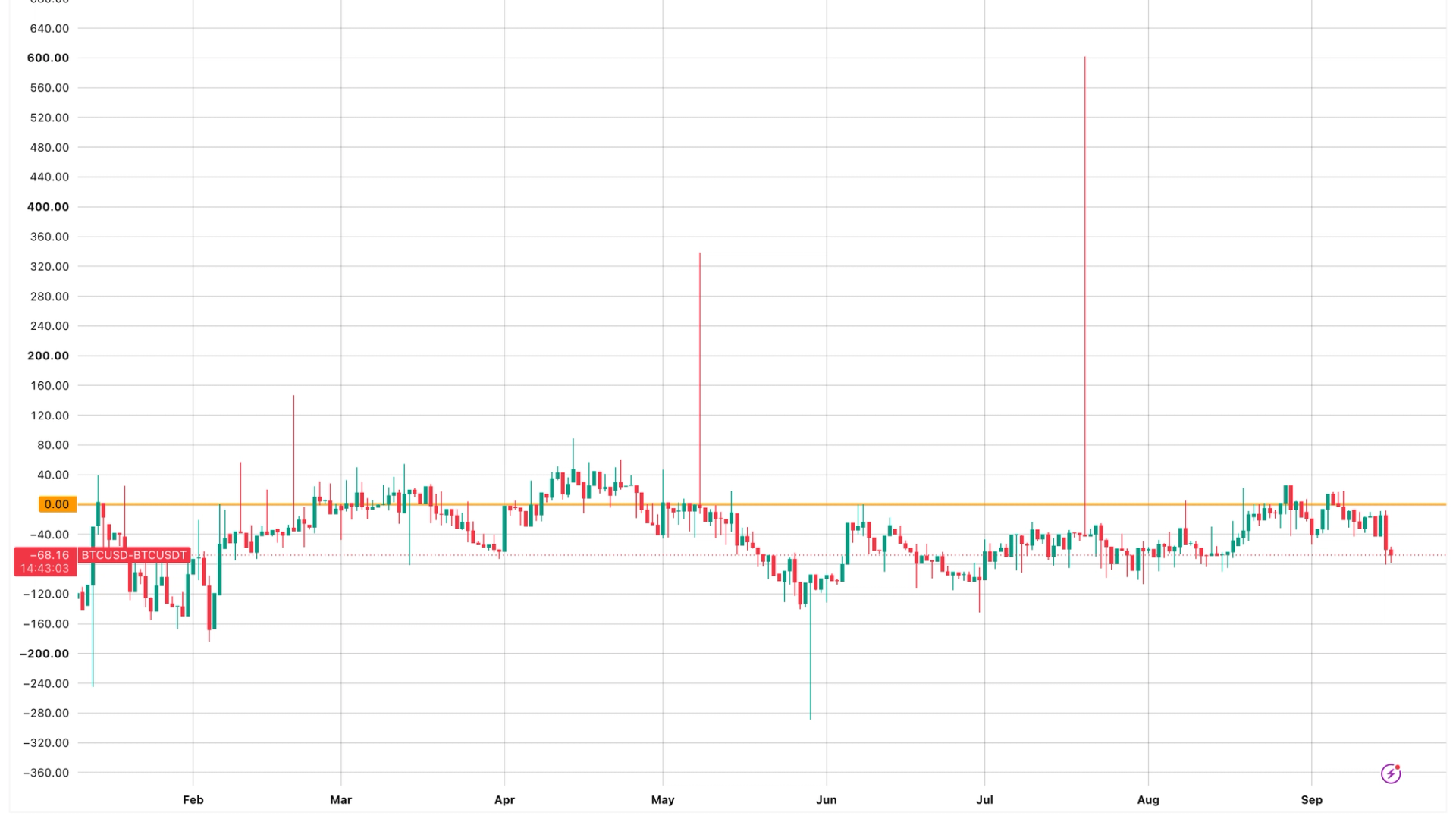
Bitcoin is facing pressure from multiple directions in September 2026, and one closely watched metric is capturing the shift in real time. The Coinbase premium – the gap between Bitcoin’s price on Coinbase and its price on Binance – has dropped to its lowest point in a month, a direct reflection of softening demand among U.S.-based buyers. When American retail and institutional appetite weakens, that spread narrows or turns negative, and right now it is doing exactly that.
Three forces are converging to push demand lower: a legislative setback for the Clarity Act, growing expectations that the Federal Reserve will raise interest rates again, and a broader pullback in U.S. spot buying activity.
That combination is enough to rattle even the most patient Bitcoin holders.
The Clarity Act Stumbles, and Markets Notice
The Clarity Act had been one of the more anticipated pieces of crypto legislation moving through Washington, offering the industry a cleaner regulatory framework and, more importantly, a degree of certainty that institutional money managers have been waiting on before committing larger allocations to digital assets. A setback for that bill – whether a delay, a failed committee vote, or a significant amendment that strips out core provisions – removes a near-term catalyst that part of the market had been quietly pricing in. Without that regulatory clarity, compliance-sensitive capital tends to sit on the sidelines rather than rotate into Bitcoin.
The Coinbase premium is particularly sensitive to this kind of policy-driven hesitation because it tracks U.S.-specific demand in isolation. Binance’s global order book reflects international buying pressure, which can remain steady even when American buyers pull back. So when the premium sinks, it is almost always a U.S.-side story. Right now, domestic buyers are not stepping in to hold the spread, and the Clarity Act’s troubles are a meaningful part of why.
Legislative uncertainty has a compounding effect – it does not just pause new inflows, it can also push existing participants toward the exit while they wait for a clearer picture to emerge.
Fed Rate Hike Expectations Tighten the Screws
On top of the legislative friction, expectations for another Federal Reserve rate hike are adding a macroeconomic layer of pressure that Bitcoin has struggled to shrug off. Higher interest rates increase the opportunity cost of holding non-yielding assets like Bitcoin. When a risk-free Treasury bond is paying a competitive return, the calculus for allocating capital into a volatile digital asset shifts – particularly for institutional players with mandates tied to risk-adjusted returns. The expectation alone, even before a hike is formally announced, is enough to move sentiment.
Rate hike cycles have historically coincided with reduced appetite for speculative assets, and while Bitcoin’s relationship with macroeconomic conditions has grown more nuanced as the asset class has matured, the broad dynamic still holds. When money gets more expensive to borrow and safer alternatives offer real yield, Bitcoin tends to see its marginal buyers hesitate. That hesitation shows up in metrics like the Coinbase premium before it shows up in price charts, making it a useful leading signal for traders watching U.S. demand cycles.
The Fed’s trajectory into late 2026 has been a source of debate, with inflation readings keeping policymakers cautious. A rate hike at this stage would mark a notable shift in tone and would likely extend the current period of compressed U.S. crypto demand beyond what many participants had anticipated when they entered positions earlier in the year. For Bitcoin buyers who had been counting on a more accommodative monetary environment by the fall of 2026, the recalibration is uncomfortable.
What makes the current setup particularly difficult is that all three pressures – weak domestic demand, a stalled bill, and rate hike risk – arrived at roughly the same time, rather than sequentially.

What the Premium Signal Actually Means
The Coinbase premium is not a perfect instrument, but it is one of the cleaner ways to isolate U.S. buyer behavior from the global Bitcoin market. A sustained negative or near-zero premium suggests that American demand is not leading the market, and that price support, if it exists, is coming from buyers elsewhere – Asia, Europe, or over-the-counter desks operating outside U.S. hours. That geographic shift in demand leadership can matter for price stability, because U.S. institutional flows tend to be larger, more sustained, and more correlated with broader risk-asset behavior than retail-driven buying from other regions.
The premium reaching a one-month low does not automatically signal a deeper price correction. It is possible that international demand absorbs the slack and Bitcoin holds its range. But it does indicate that the U.S. bid – the segment of the market most sensitive to regulatory developments like the Clarity Act’s ongoing delays and Federal Reserve policy – is not the source of strength it was a month ago. That matters because U.S. institutions moving at scale are what typically catalyze the sustained upward moves Bitcoin has experienced in previous cycles.
For traders watching this metric, the question is whether the Coinbase premium recovers quickly once any of the three headwinds resolves – or whether the weakness persists long enough to feed into actual spot price deterioration, turning a soft demand signal into a harder market reality.
Comments are closed, but trackbacks and pingbacks are open.