
FOMO App Puts Crypto Investing at Your Fingertips
Trading in the Open
Crypto trading has a timing problem. By the time a trade surfaces in a group chat, gets screenshotted, and circulates through social feeds, the person who made it has usually already closed the position. FOMO is a social trading platform designed around one structural fix: make every trade visible the moment it happens, not after the fact.
What Traders Actually See
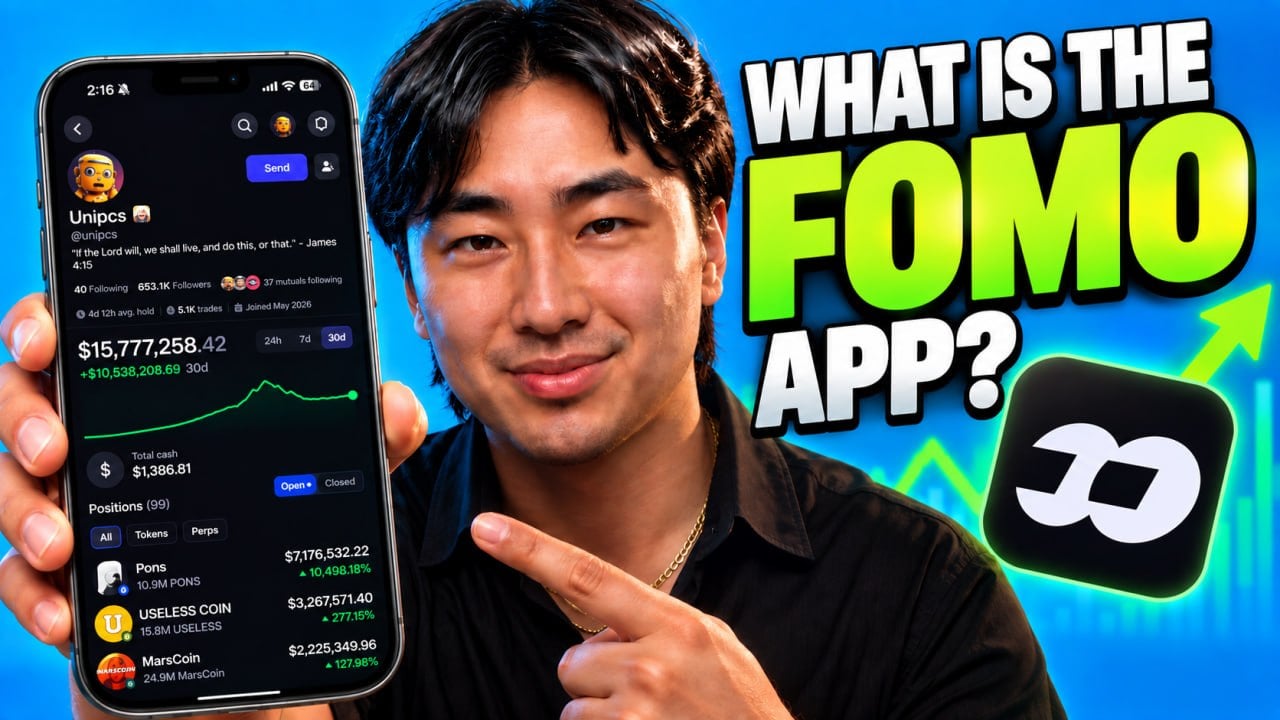
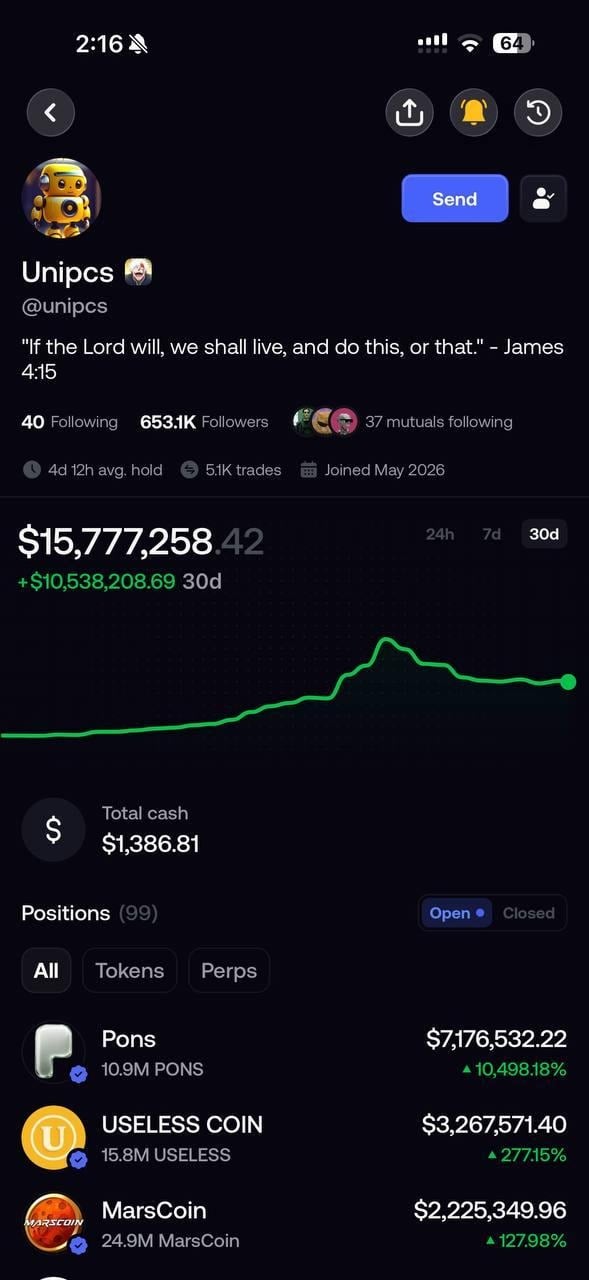
At the core of the platform is the trader profile, and it functions less like a biography and more like a live dashboard. Every profile displays total profit and loss, win history, average hold time, total number of trades, and a continuously updated list of both open and closed positions. Nothing is self-reported in the traditional sense – the data updates as positions move.
Followers get notified the moment a trader they track opens or closes a position. From that notification, they can copy the trade directly. The gap between “someone made a good call” and “you had a chance to act on it” collapses to near zero. That lag – the one that makes most crypto alpha functionally useless to anyone who isn’t already in the inner circle – is the specific thing FOMO is engineering around.
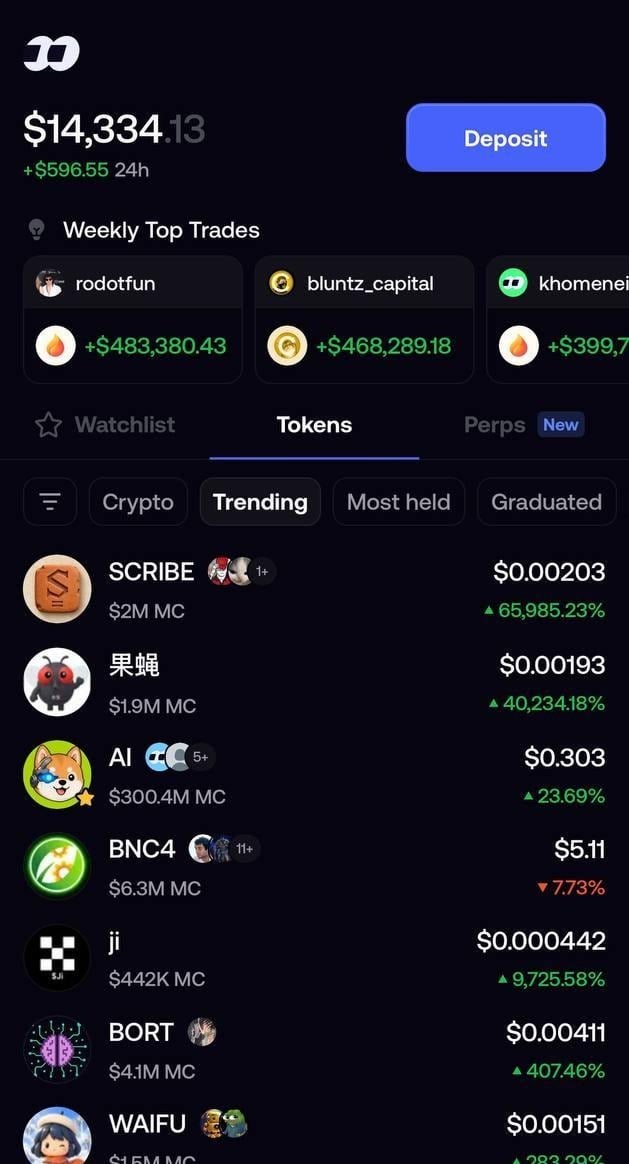
Beyond individual traders, the platform includes a token discovery layer with three filters: Trending, Most Held, and Graduated. Live price and 24-hour percentage change update continuously alongside each token. Market cap is visible at a glance, which matters when sizing risk quickly. The Graduated filter is particularly useful for separating tokens with some track record from raw, unproven launches – a distinction that can determine whether a position is speculative or purely gambling.
Each token page goes further than a standard price chart. It shows which traders are currently holding the token, their entry price, their unrealized gain or loss, and in many cases their stated reasoning for the trade. This is where the app departs most clearly from conventional screeners. A chart shows you what a price did. A token page on FOMO shows you who is sitting in a position right now, at what cost basis, and why they got in – including traders who are skeptical and using the same feed to flag supply risk or other concerns.
Leaderboards and Clan Rankings
The leaderboard ranks every trader on the platform by realized profit across four timeframes: 24 hours, 7 days, 30 days, and all-time. That range matters because a single lucky trade can inflate a short-window ranking. A trader who appears near the top of both the 30-day and all-time boards has demonstrated something more durable, and every trade behind that ranking is inspectable.
Anyone can claim a winning record in crypto. Screenshots can be cropped, timestamps can be faked, and group chats have no verification mechanism whatsoever. A public leaderboard built from actual trade data is a different thing – closer to a verifiable professional record than anything the current ecosystem of Telegram calls and Twitter posts can produce. The all-time board in particular functions as the closest analog crypto has to an audited track record.
For traders who operate in groups, FOMO introduced Clans: teams whose combined profit and loss is tracked and ranked against every other clan on the platform in real time. The numbers come directly from on-chain and platform activity, so there is no mechanism to inflate a clan’s standing. A clan’s position on the board reflects exactly what its members have actually done with real money. The competitive structure creates an incentive that no leaderboard of individual traders can replicate – collective accountability, where a single trader’s bad week drags the whole group’s ranking down.
The verifiability point is worth sitting with. Most of what passes for performance data in crypto communities is social proof dressed up as evidence. Someone has a lot of followers. Someone’s call worked once. Someone’s screenshot shows a green position. None of that tells you how the person sizes their losses, how often they’re actually right, or whether the timestamp on that post came before or after the token moved. FOMO’s architecture makes all of those things observable by default.
What the platform is really betting on is that the information problem in crypto isn’t about volume – there is no shortage of calls, charts, analyses, and opinions. The problem is that timely, verifiable information has historically been locked behind access: the right group, the right follow list, the right network. A platform where every trade is public by design flips that structure. The question of whether traders with genuinely strong records will accept that level of transparency at scale – or whether the best performers will find reasons to stay private – is the tension the model hasn’t fully resolved yet.
On-Chain Accountability
The underlying logic of a platform like FOMO maps closely to what blockchain infrastructure is supposed to enable in the first place: records that cannot be quietly revised after the fact. Trade data pulled from on-chain activity carries a kind of permanence that no centralized leaderboard or community reputation system can replicate. A trader’s history on FOMO isn’t a curated highlight reel – it includes every position, including the ones that went wrong.
That creates a dynamic that conventional social media never could. On Twitter or Telegram, a trader controls their own narrative almost completely. They post the wins, bury the losses, and build an audience on selective memory. On a platform where the data is live and public, a losing streak is just as visible as a winning one. Whether that accountability pressure produces better trading or simply drives away anyone with something to hide is an open question – but it’s the kind of question that only surfaces when the information is actually available.
Comments are closed, but trackbacks and pingbacks are open.