
Bitcoin Holds Ground as Treasury Yields Rise, Defying Macro Pressure
An Old Rivalry, Retested
Every macro shock resets the argument between Bitcoin and gold – and the current environment, marked by climbing Treasury yields and renewed risk aversion, is doing exactly that again.

Bitcoin’s Behavior Under Yield Pressure
Rising Treasury yields have historically been hostile to non-yielding assets. When the return on safe government debt increases, capital tends to rotate away from assets that produce no income – and both gold and Bitcoin sit squarely in that category. The conventional expectation, then, is that higher yields should weigh on Bitcoin’s price. What’s happening instead is more complicated.
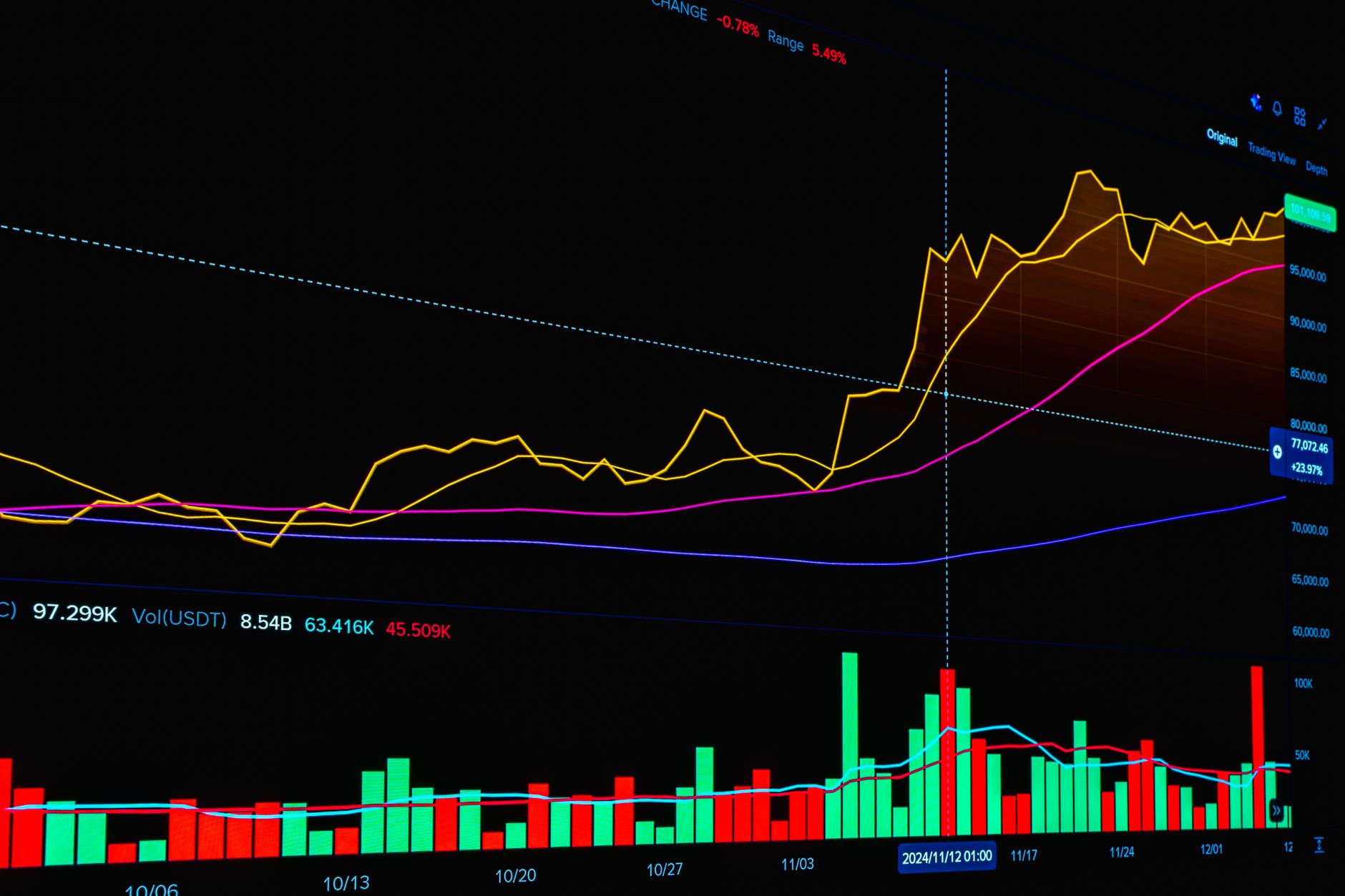
Bitcoin is holding strong despite the yield environment pressing against it. That kind of resilience isn’t incidental – it suggests that the demand holding Bitcoin up isn’t coming from the same macro-sensitive pools of capital that would ordinarily flee toward Treasuries. Institutional accumulation, spot ETF inflows, and retail activity tied to halving-cycle momentum are each playing a role in keeping sell pressure contained even as bond markets tighten.
Gold, by contrast, has its own reasons to perform well in a high-yield, high-uncertainty world. It benefits from flight-to-safety demand, central bank buying, and its long-established role as an inflation hedge. But gold’s upside in a macro shock tends to be measured. It moves, but it doesn’t sprint. When Bitcoin outperforms during stress periods, it tends to do so by a significant margin – which is precisely what makes the current setup worth watching closely.
The setup forming now – Bitcoin stable, yields elevated, uncertainty building – mirrors conditions that preceded previous episodes where Bitcoin broke higher while traditional safe havens moved more slowly. That doesn’t guarantee a repeat, but the structural conditions are similar enough that the comparison carries weight.
What a $10,000 Position Actually Faces
Put $10,000 into gold today and you’re buying an asset with a centuries-long track record of preserving value through wars, currency collapses, and banking crises. The downside protection is real. Gold rarely goes to zero, rarely moves 20% in a week, and rarely requires its holder to understand anything more complex than basic supply and demand. For someone allocating capital ahead of a macro shock, that predictability has genuine value – especially if the shock turns out to be deflationary rather than inflationary.
Put that same $10,000 into Bitcoin and the risk profile changes entirely. Bitcoin can drop 30% in a matter of days during acute stress events – March 2020 being the most cited example, when it sold off sharply alongside equities before recovering and eventually posting enormous gains. The volatility cuts both ways. Someone who held through that drawdown saw Bitcoin climb from around $4,000 to over $60,000 in the following 18 months. Someone who sold at the bottom locked in a loss and missed the entire recovery.
The critical variable is time horizon. In a short, sharp shock – the kind where liquidity dries up fast and margin calls hit across asset classes – Bitcoin tends to suffer early. Forced sellers hit every liquid market they can reach, and Bitcoin’s 24/7 trading makes it an easy target for rapid liquidation. Gold, stored in vaults and traded through more traditional channels, faces less of that immediate pressure. For a shock measured in days or weeks, gold’s short-term stability is a genuine advantage.
Stretch that horizon out to six or twelve months, and the calculus shifts. Bitcoin’s recovery cycles after macro dislocations have historically been faster and steeper than gold’s. The asset’s fixed supply – capped at 21 million coins – means that once selling pressure clears, there’s no additional supply entering the market to dampen the rebound. Gold miners respond to higher prices by producing more gold. Bitcoin’s protocol doesn’t respond to price signals at all. Whether Bitcoin is already positioning for that kind of exit from its current range is a question traders are actively debating.
There’s also the question of what kind of macro shock actually materializes. A sovereign debt crisis, a banking contagion event, or a dollar confidence shock would likely benefit Bitcoin more than gold – because those scenarios call into question the institutions and systems that gold still partially operates within. A deflationary crash driven by collapsing asset prices would likely favor gold in the short run, as it did even in 2008, before Bitcoin existed as an alternative. The nature of the shock matters as much as the shock itself.
The Yield Signal and What Comes Next
Treasury yields rising while Bitcoin holds – rather than selling off – is the specific detail that makes the current moment worth noting. Normally those two things don’t coexist for long. Either yields come back down, relieving pressure on non-yielding assets, or risk assets eventually capitulate to the reality of tighter financial conditions. Bitcoin staying firm through that tension implies that something other than macro sensitivity is driving its price right now.
If yields do turn lower – whether because of a growth scare, a Federal Reserve pivot signal, or a flight into bonds during a risk-off event – Bitcoin’s current floor could become a launchpad. Gold would benefit from the same scenario, but Bitcoin’s beta to rate relief has historically been higher. The $10,000 question, then, isn’t just which asset is safer – it’s which asset’s current positioning leaves more room for asymmetric upside when the macro environment shifts.

Gold closed last week near record highs. Bitcoin is holding levels that, a year ago, most analysts would have called optimistic. Both assets are entering a potential macro shock from positions of relative strength – which means the next real test isn’t whether they can hold value, but how far each one moves when the pressure actually hits.
Comments are closed, but trackbacks and pingbacks are open.